Trade guide · 2026 European outdoor sourcing · USA

Coastal guide

Marine-grade outdoor furniture, what survives US coastal exposure.

For US coastal installations — Florida Atlantic and Gulf Coast, Florida Keys, California coast, Outer Banks, Cape Cod, San Juan Islands — outdoor furniture has to be specified for the salt-air, UV, and seasonal storm environment that ordinary outdoor furniture does not handle. The brand-by-brand specification, the materials that work, and the hardware mistakes that cost a coastal project a full refurbishment cycle in 18 months.

Updated June 2026 — pricing brackets, lead-time ranges, and certification thresholds in this guide reflect 2026 market data from European outdoor furniture manufacturers.

The three mechanisms by which salt-air destroys outdoor furniture

1. Chloride-accelerated corrosion

Chloride ions accelerate the oxidation of aluminum, steel, and iron substantially faster than freshwater exposure. Within 18 months of direct coastal exposure, un-anodized aluminum pits at the surface. Within 24 months, zinc-plated steel hardware rusts through. The mechanism is well-documented in EPA coastal materials studies and standard marine engineering references.

2. Powder-coat failure at the substrate interface

Salt-water penetrates microscopic powder-coat defects, reaches the aluminum substrate, lifts the coating from the substrate. The visible failure is flaking; the structural failure is sub-coating corrosion that spreads laterally. Marine-grade powder-coat (military spec CARC or equivalent) addresses this through a primer-and-topcoat system with chemical adhesion at the substrate.

3. UV and salt synergy on fiber and fabric

Standard synthetic fibers, non-UV-stabilized natural fibers, and non-bleach-cleanable fabric degrade faster under combined salt-and-UV exposure than under freshwater or shaded conditions. Marine-grade specification requires UV-stabilized fiber (Dedon Fiber, Cane-line Soft Rope, Tribù braid all qualify) and bleach-cleanable fabric (Sunbrella Contract Grade and Outdura Renaissance are standard).

Marine-grade material specification

MaterialMarine-grade specificationWhat to confirm at quote
Aluminum frameMarine-grade alloy 5052 or 6061; anodized OR military-spec powder-coatAlloy specification and coating system
Hardware (fasteners, fittings)Stainless steel 316 or marine-grade aluminumHardware material spec
Woven fiberUV-stabilized: Dedon Fiber, Cane-line Soft Rope, Tribù braid, Manutti weave, Vincent Sheppard LoomManufacturer UV-stability rating
FSC teakGrade A FSC teak, structurally suitable for coastal exposure with annual cleaningFSC chain-of-custody certificate
Cushion fabricSunbrella Contract Grade or Outdura Renaissance (bleach-cleanable)Fabric grade and bleach-cleanable certification
FoamQuick-dry foam (AirTouch, Dryfast) to prevent salt-water retentionFoam type specification
Frame finishMarine-grade powder-coat (3-5 year warranty in coastal use)Powder-coat warranty terms in coastal exposure

Brand-by-brand marine-grade qualification

BrandMarine-grade statusSpecifier notes
DedonFullMarine-grade aluminum + UV-stable Dedon Fiber. Florida Keys, Outer Banks reference installations.
TribùFullMarine-grade aluminum + UV-stable Tribù braid + FSC teak. Cape Cod, Hamptons reference.
RodaFullMarine-grade aluminum specifically engineered for Italian coastal exposure. Translates directly to US coast.
KettalFullMarine-grade aluminum across catalog. Standard Spanish coastal-resort specification.
Cane-lineFullMarine-grade aluminum + UV-stable Cane-line Soft Rope. Danish North Sea engineering.
FASTFullDie-cast marine-grade aluminum. Italy's all-aluminum specialist.
TuuciFullFlorida-engineered marine-grade parasols. Storm-rated to coastal Florida codes.
ManuttiFullMarine-grade aluminum + UV-stable Manutti weave.
GlosterFull (teak focus)FSC teak performs in coastal exposure with annual cleaning. Aluminum components marine-grade.
Vincent SheppardFullMarine-grade aluminum + UV-stable Loom fiber.
SkagerakFull (teak focus)FSC teak performs in coastal exposure. Steel components powder-coated to marine grade.
GlatzFullSwiss-engineered marine-grade aluminum parasol structures.

US coastal regions and their specification requirements

RegionSpecification requirements
Florida Keys, Outer FloridaMarine-grade aluminum + UV-stable fiber + hurricane storm-rated parasols. Most aggressive US coastal exposure. Annual care cycle required.
Florida Atlantic and Gulf CoastMarine-grade aluminum + UV-stable fiber + bleach-cleanable fabric. Storm-rated parasols.
California Coast (Malibu, La Jolla, Big Sur)Marine-grade aluminum + UV-stable fiber. Salt-fog exposure year-round. Storm exposure lower than Florida.
Outer Banks NC, Cape Cod MAMarine-grade aluminum + bleach-cleanable fabric + winter-storage protocol. Salt + freeze-thaw combination.
San Juan Islands WA, Pacific Northwest coastMarine-grade aluminum + UV-stable fiber + FSC teak. Cooler UV but high humidity.
Long Island Sound, Newport RIMarine-grade aluminum + bleach-cleanable fabric + winter-storage protocol.

What to avoid: the catalog of mistakes

The five mistakes that cost a coastal project an 18-month refurbishment cycle

1. Zinc-plated steel hardware. Rusts within 12-18 months. Insist on stainless steel 316 or marine-grade aluminum.
2. Painted (not powder-coated) aluminum. Flakes within 2-3 years in coastal exposure.
3. Non-UV-stabilized synthetic rattan. Degrades within 3-5 years. Specify Dedon Fiber, Cane-line Soft Rope, Tribù braid, or equivalent UV-rated yarn.
4. Iron or non-galvanized steel structural elements. Rust through within 5-7 years.
5. Non-bleach-cleanable cushion fabric. Fails after 2-3 seasons of the salt-and-bleach cleaning cycle that coastal installations require.

The pattern: specifying mass-market outdoor furniture for coastal exposure costs three times more across the property service life than specifying European marine-grade from the start.

Care routine for coastal installations

  • Weekly during peak season: clean-water rinse to wash off salt deposits. A garden hose, no soap.
  • Quarterly: mild-soap wash with soft brush. Pay attention to fiber weave, hardware joints, cushion seams.
  • Annually: inspect hardware for corrosion, powder-coat for flaking, fiber for degradation. Replace components proactively rather than reactively.
  • Pre-storm: secure or store loose cushions and umbrella shafts. Lash structural elements if hurricane warning is active. Tuuci storm-rated parasols can be left deployed; non-storm-rated parasols must be retracted or removed.
  • Off-season storage (Cape Cod, Outer Banks, similar freeze-thaw coastal climates): cushions and woven elements indoors or in a shed. Aluminum frames stay outdoors with covers.

Yacht and marina vs coastal residential specification

"Marine-grade" covers two structurally different use environments. Specifying yacht/marina-rated furniture for coastal residential overpays for capability that is not used; specifying coastal-residential furniture for yacht use under-specifies and the lifecycle assumption fails.

Coastal residential (within 1,500 ft of saltwater)

  • Exposure: persistent salt aerosol, moderate UV, occasional direct salt spray during storm events
  • Adequate spec: 316 stainless hardware, marine-grade powder-coated aluminum, FSC teak with annual rinse routine. Most premium European outdoor (Dedon, Tribù, Kettal, Cane-line, Gloster) meets the requirement.
  • Excessive spec: yacht-grade certified fabric, deck-grade titanium hardware, anodized aluminum with epoxy primer — overkill for the duty cycle.

Yacht and marina (continuous saltwater contact)

  • Exposure: continuous salt-spray, full-time UV including reflected from water, hull-condensation humidity cycles, vibration, occasional submersion in heavy weather
  • Required spec: 316L stainless hardware (not just 316), marine-anodized aluminum with epoxy primer (not standard powder coat), water-quick-dry foam designed to drain through pinholes, fabric rated to 1,500+ hours Xenon plus marine-specific abrasion testing, structural designs that allow draining and rapid drying
  • Brand qualification: very few European outdoor brands are genuinely yacht-rated. Tuuci marine-rated parasols, select Roda marine lines, select Dedon marine specifications, and Glatz marine series qualify. Most "coastal" specifications from premium brands do not.

The structural difference

Coastal residential is a UV+salt-aerosol problem. Yacht is a continuous-water-contact problem. The materials engineering differs at the molecular level: marine-anodized aluminum at the yacht grade uses a thicker oxide layer (0.030+ mm vs 0.015 mm for coastal-residential) and a different sealing chemistry. Marine-grade quick-dry foam differs from coastal cushion foam in pin-drainage pattern, not just density.

Most US trade quotes for yacht or megayacht projects should reference the IMO MED (Marine Equipment Directive) and IMCI (International Marine Certification Institute) qualification rather than the residential "marine-grade" label. Specify Tuuci marine, Roda marine, or a US specialist for these projects, not a residential coastal European line.

Hurricane evacuation and storm-stow protocol

Coastal property owners and hospitality operators in the Atlantic and Gulf hurricane zones face an operations problem that residential specifications rarely address. The wrong spec turns hurricane preparation into a 6-hour labor crisis; the right spec finishes in 90 minutes.

Specification choices that affect storm-stow time

Furniture typeStorm-stow time per pieceHurricane-zone recommendation
Italian upholstered lounge4-6 minutes (does not stack or fold)Spec for indoor-adjacent only; not perimeter
Hand-woven luxury (Dedon Mbrace, Paola Lenti Frame)3-5 minutes plus cover laborSpec with bespoke covers ready; budget storage labor
Premium teak dining set2-3 minutes plus tie-downSpec; needs ground anchor or weight-loading kit
Aluminum stack dining chairs30-45 seconds per 8-chair stackSpec preferred for dining and bar perimeter
Storm-rated parasols (Tuuci, Glatz)10-15 seconds (leave deployed if rated)Spec for hurricane-zone properties; replaces removal labor
Standard parasols3-5 minutes per umbrella (retract, store)Spec only if storage is on-site and labor is available

Standard storm-stow protocol

  1. 72 hours before landfall: bring all cushions and loose textile elements indoors. Removing cushions and tying down structural pieces is the longest-duration labor.
  2. 48 hours before landfall: retract or remove all non-storm-rated parasols. Lash storm-rated parasols (Tuuci marine, Glatz storm) per manufacturer protocol — do not assume retract is the right answer for storm-rated.
  3. 24 hours before landfall: tie down stack chairs and dining sets. For weight-loadable furniture, add ground anchor weight kits or sandbag ballast.
  4. 12 hours before landfall: final walk; remove any small objects left at perimeter. The wind-borne missile risk from a left-behind chair cushion or end table is the highest-claim outcome.

Spec to design for storm-stow

  • For hurricane-zone hospitality: spec stack-chair dining and bar perimeter, storm-rated parasols, on-site climate-controlled cushion storage as part of the FF&E spec, and a written storm protocol delivered at turnover.
  • For hurricane-zone residential premium: spec storm-rated parasols and quick-stow weight kits for the loose elements. Specify storage on the architectural drawings — many residential storm-stow failures trace to "we did not have somewhere to put the cushions."
  • For mixed-tier projects: keep luxury and Italian upholstered indoor-adjacent (covered terrace, indoor-outdoor pavilion) and use premium-tier flat-stow lines (Houe, Skagerak, Cane-line stack series) at the open perimeter.

Authenticating marine-grade stainless and aluminum

"Marine-grade" is unregulated in US consumer outdoor furniture. Five checks separate authentic marine-grade specification from premium-priced standard-grade hardware. All five should be available on request from a competent European brand within 48 hours.

  1. 316 vs 316L stainless certificate. 316 stainless resists chloride pitting at room temperature; 316L (low-carbon variant) resists pitting after welding without sensitization. Yacht-grade specifications require 316L. Coastal residential is acceptable at 316. A "stainless steel marine grade" claim without a 316 or 316L designation may be 304 (which corrodes in saltwater) priced as 316.
  2. Mill test report (MTR) on the stainless hardware. The MTR shows chromium content (16-18%), nickel content (10-14%), and molybdenum content (2-3% — this is what makes the difference vs 304). A supplier who cannot provide the MTR is sourcing through a grey channel.
  3. Aluminum alloy specification: 6061-T6 for structural, 5083 or 5086 for marine-skin applications. A "marine-grade aluminum" claim should reference the alloy. 6063 and 3003 are common substitutes and are not marine-grade — they corrode under chloride exposure.
  4. Powder-coat film thickness measurement. Marine-grade powder coat is specified at 80-120 microns dry film thickness with epoxy primer underneath. Standard polyester powder coat at 40-60 microns is what most "marine-grade" residential furniture actually has. Request the spec sheet.
  5. Anodizing thickness on anodized aluminum frames. Coastal residential typically uses Class II anodizing at 0.018-0.025 mm. Yacht-grade requires Class I architectural at 0.025-0.030 mm minimum, often with epoxy primer or vinyl-resin top coat. The anodizing spec should be on the cut sheet.

A premium European brand will produce all five documents on request. A "marine-grade" line that cannot produce three of the five is residential coastal at premium pricing. Confirm before deposit.

The 12 most-specified marine-grade brands for US coastal

Frequently asked

What outdoor furniture is best for coastal salt-air exposure?

For US coastal installations (Florida, California, Cape Cod, Outer Banks, Outer Florida Keys), the European premium brands with documented marine-grade specification are Dedon, Tribù, Roda, Kettal, Cane-line, FAST, and Tuuci. The marine-grade qualification specifically means: powder-coated marine-grade aluminum frames (not painted aluminum, which fails in salt-air), UV-stabilized woven fiber (Dedon Fiber, Cane-line Soft Rope, Tribù braid), bleach-cleanable Sunbrella Contract upholstery, and corrosion-resistant hardware (stainless steel or marine-grade aluminum, not zinc-plated steel).

How does salt-air degrade outdoor furniture?

Salt-air degrades outdoor furniture through three mechanisms. Corrosion: chloride ions accelerate oxidation of aluminum and steel; un-anodized aluminum surfaces pit within 12-18 months at coastal exposure. Powder-coat failure: salt penetrates microscopic powder-coat defects and lifts the coating from the substrate. Fabric and fiber degradation: salt-water combined with UV breaks down non-stabilized synthetic fibers and natural fibers faster than freshwater exposure. Marine-grade specification addresses all three through marine-grade aluminum alloy (typically 5052 or 6061), military-spec powder-coat (CARC equivalent), and UV-stabilized fiber engineered for outdoor service.

What is the service life of marine-grade outdoor furniture?

At documented marine-grade specification with twice-yearly clean-water rinse and annual mild-soap wash, European premium outdoor lasts 12-18 years in direct coastal exposure (within 1,000 feet of shoreline). The same furniture in non-coastal residential use lasts 20-30 years. Service life drops sharply when furniture is specified for coastal use but the marine-grade specification is missing: zinc-plated hardware rusts within 12-18 months; non-anodized aluminum pits within 24 months; non-bleach-cleanable fabric fails the seasonal cleaning routine within 3-4 years.

What should I avoid specifying for coastal outdoor installations?

Avoid: zinc-plated steel hardware (rusts within 12-18 months in coastal exposure), painted aluminum (flakes within 2-3 years), non-UV-stabilized synthetic rattan (degrades within 3-5 years), iron and standard steel structural elements (rust through within 5-7 years), and non-bleach-cleanable fabric (fails after 2-3 seasons of salt-and-bleach cleaning cycle). Confirm at quote stage: aluminum alloy specification, hardware specification (stainless or marine aluminum), fiber UV stabilization rating, and fabric bleach-cleanability.

How is yacht and marina specification different from coastal residential?

Coastal residential is a UV-plus-salt-aerosol problem at intermittent exposure within 1,500 ft of saltwater. Most premium European outdoor (Dedon, Tribù, Kettal, Cane-line, Gloster) meets this. Yacht and marina is continuous saltwater contact, hull-condensation cycles, and occasional submersion. Required spec changes: 316L stainless rather than 316, marine-anodized aluminum at 0.030 mm oxide with epoxy primer, quick-dry pin-drainage foam, and fabric rated to IMO MED or IMCI marine certification. Very few European outdoor brands qualify — Tuuci marine, select Roda marine, select Dedon marine, Glatz marine series. Most "coastal" residential specifications do not.

How should hurricane-zone properties plan storm-stow at specification stage?

Storm-stow time drives the protocol: Italian upholstered lounge takes 4-6 minutes per piece (does not stack — spec indoor-adjacent only). Aluminum stack chairs take 30-45 seconds per 8-stack (spec for dining and bar perimeter). Storm-rated parasols (Tuuci marine, Glatz storm) take 10-15 seconds (leave deployed per manufacturer protocol) versus 3-5 minutes for standard parasols. For hurricane-zone hospitality, spec stack-chair perimeter, storm-rated parasols, on-site climate-controlled cushion storage in the FF&E budget, and a written storm protocol at turnover. For residential, specify storage on architectural drawings — many storm-stow failures trace to "we did not have somewhere to put the cushions."

How do I authenticate marine-grade hardware before deposit?

Five checks within 48 hours of request: 316 or 316L stainless certificate with molybdenum content (2-3% is what separates from 304), mill test report on stainless hardware, aluminum alloy specification (6061-T6 structural, 5083 or 5086 marine-skin — 6063 and 3003 are residential substitutes that corrode), powder-coat film thickness spec (marine is 80-120 microns with epoxy primer; standard residential is 40-60 microns polyester), and anodizing thickness on anodized frames (coastal residential Class II at 0.018-0.025 mm; yacht-grade Class I at 0.025-0.030 mm minimum). A "marine-grade" line that cannot produce three of the five is residential coastal at premium pricing.
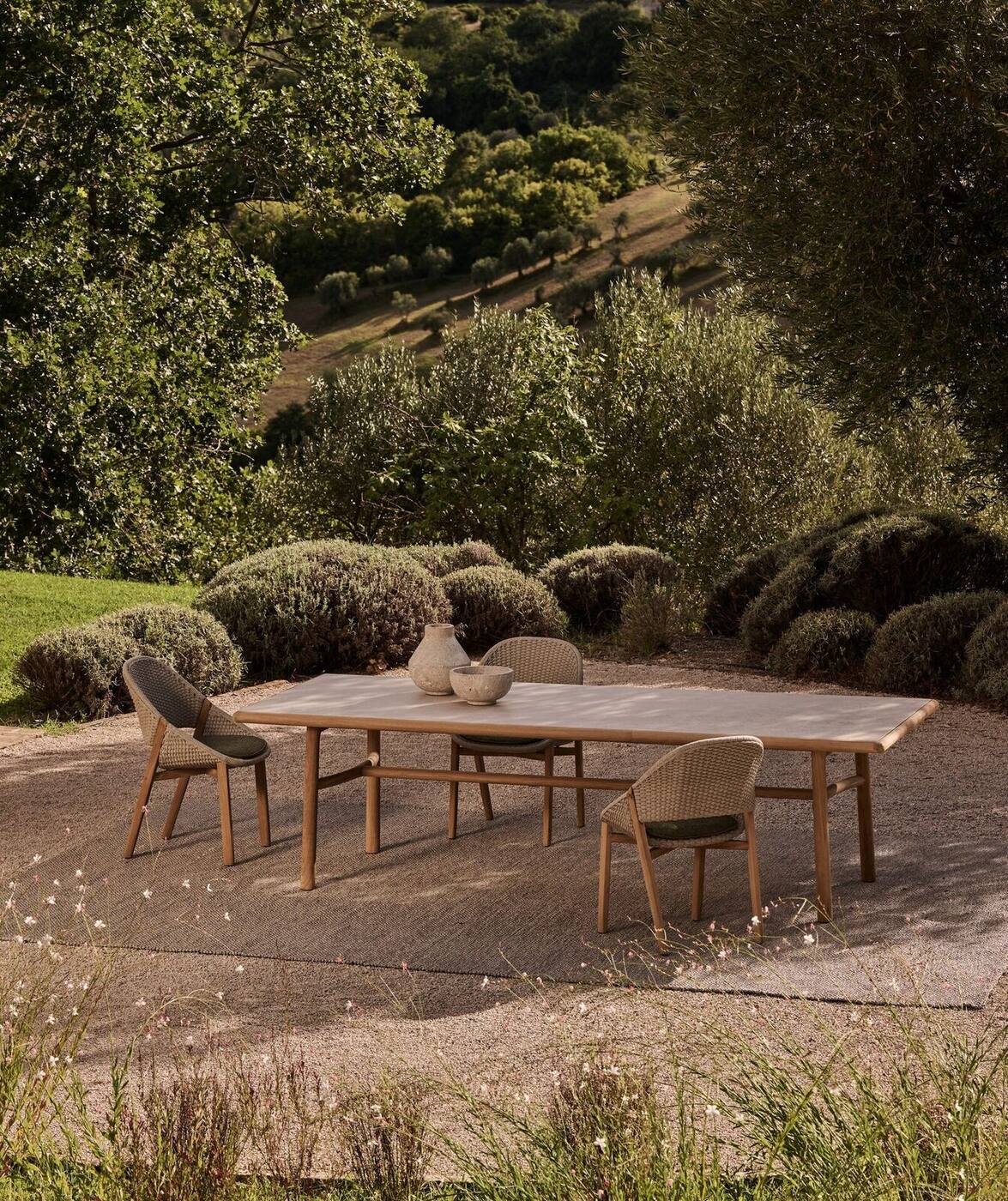
Specifying for coastal

Marine-grade brand short-list

Send the project brief — location, exposure zone, scope. We come back with marine-grade short-list and storm-rating docs.

Request coastal spec

More specifier resources written for US trade buyers, designers, and architects working with European outdoor furniture.